How Much Does a Bathroom Renovation Cost in 2026? [UK Guide]
Last updated: 21 September 2026
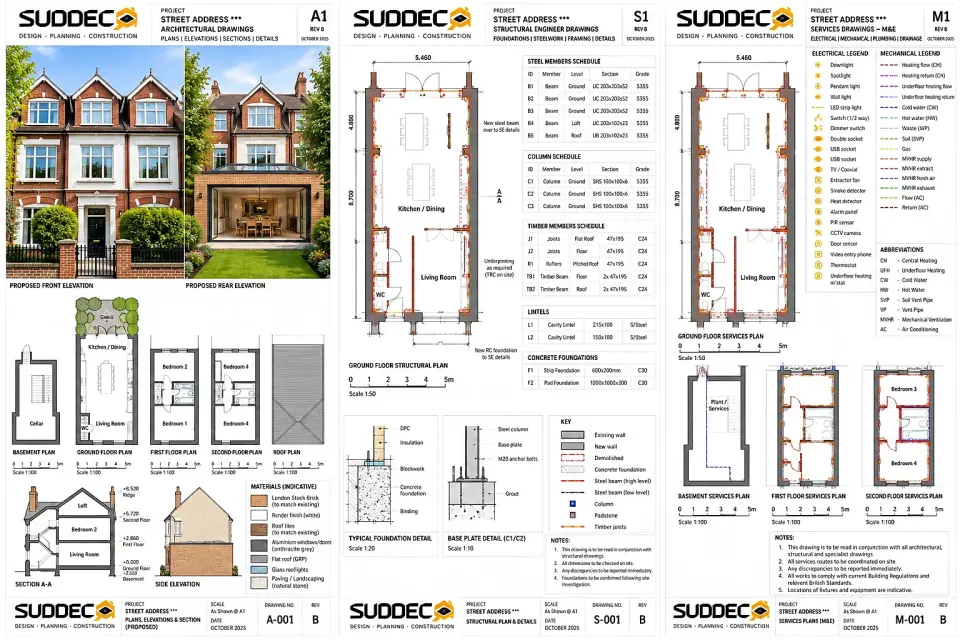
See it for your own home: put in your address and get free concept drawings and an indicative price. Get my free concept → Or see our Bathrooms →
If your bathroom is looking tired, leaking, or simply stuck in the 1990s, you are probably wondering: how much does a bathroom renovation actually cost in 2026?
The short answer: a full bathroom renovation in the UK costs between £3,000 and £20,000 including VAT, depending on the size of the room, the quality of fixtures, and whether you are keeping the existing layout or starting from scratch. For a standard 6 m² family bathroom with a mid-range suite and tiling, most homeowners should budget £5,000–£10,000 all-in. A high-end wet room or luxury en-suite with underfloor heating and bespoke sanitaryware can push well beyond £20,000.
Unlike a kitchen extension or loft conversion, a bathroom renovation does not usually require planning permission, and the work is completed inside your home — meaning no scaffolding, no skips in the driveway, and minimal weather risk. But the final bill can still spiral if you change the layout, discover hidden water damage, or fall in love with £80-per-square-metre tiles.
At Suddeco Homes, our online platform reads your UK address and shows you what similar bathroom renovations have cost nearby — based on real, approved planning applications and local builder data. We then generate instant renders, architect-quality drawings, and priced designs. Get your free estimate here.
Table of Contents
- Bathroom Renovation Cost Overview
- Cost by Bathroom Type
- Cost by Size and Specification
- Regional Cost Differences
- What Affects the Total Cost?
- Hidden Costs You Should Budget For
- How to Save Money on Your Bathroom Renovation
- How Long Does a Bathroom Renovation Take?
- How Suddeco Helps You Budget Accurately
- Frequently Asked Questions
Bathroom Renovation Cost Overview
Bathroom renovations are priced by the room, not by the square metre — because the cost is driven more by the number of fixtures, the complexity of plumbing, and the quality of finishes than by floor area alone. In 2026, UK homeowners should expect to pay:
| Project Type | Budget (incl. VAT) | Mid-Range (incl. VAT) | Premium (incl. VAT) |
|---|---|---|---|
| Cloakroom / downstairs WC | £1,500–£3,000 | £3,000–£5,000 | £5,000–£8,000 |
| Small bathroom (4–6 m²) | £3,000–£5,000 | £5,000–£9,000 | £9,000–£18,000 |
| Medium bathroom (6–10 m²) | £4,500–£7,000 | £7,000–£13,000 | £13,000–£25,000 |
| En-suite (3–6 m²) | £3,000–£5,500 | £5,500–£10,000 | £10,000–£18,000 |
| Wet room (any size) | £4,000–£7,000 | £7,000–£15,000 | £15,000–£30,000+ |
Sources: HomeOwners Alliance; indicative Suddeco estimates
These figures include strip-out, disposal, plumbing, electrics, tiling, flooring, sanitaryware, and fitting labour. They also include VAT at 20% on labour and materials. VAT is charged at the standard rate for most bathroom renovations because they are classified as repairs and maintenance to an existing dwelling. The only exceptions are new-build properties (zero-rated) or buildings that have been unoccupied for at least two years (reduced rate of 5% — see VAT Notice 708).
Quick estimate: A 6 m² family bathroom, mid-range specification, keeping the same layout = £6,000–£8,000 all-in. Add a layout change, underfloor heating, and premium tiles, and you are looking at £10,000–£14,000.
Cost by Bathroom Type
Not all bathrooms are the same. The type of room you are renovating has a significant impact on cost — mainly due to the number of fixtures, the amount of tiling, and the complexity of waterproofing.
Family Bathroom
The most common project in the UK. Typically contains a bath (or shower-bath), toilet, basin, and often a separate shower enclosure.
| Metric | Cost (incl. VAT) |
|---|---|
| Budget (like-for-like replacement) | £3,000–£5,000 |
| Mid-range (new suite, full tiling, layout changes) | £5,000–£10,000 |
| Premium (freestanding bath, walk-in shower, underfloor heating) | £10,000–£20,000 |
En-Suite Bathroom
En-suites are smaller but often more expensive per square metre because they are squeezed into tight spaces and may require complex drainage runs.
| Metric | Cost (incl. VAT) |
|---|---|
| Renovation of existing en-suite | £3,000–£8,000 |
| Creating new en-suite from bedroom space | £5,500–£14,000 |
Creating a new en-suite from scratch involves partitioning, new soil pipe runs, structural checks for floor loading, and ventilation — adding £2,000–£5,000 to the base cost.
Wet Room
A wet room is fully waterproofed (tanked) with a floor-level drain and no shower tray. It looks sleek, is easy to clean, and is ideal for accessible bathrooms — but it requires specialist waterproofing and precise floor grading.
| Metric | Cost (incl. VAT) |
|---|---|
| Budget wet room | £4,000–£7,000 |
| Mid-range wet room | £7,000–£15,000 |
| Luxury wet room | £15,000–£30,000+ |
The premium over a standard shower bathroom is typically £1,000–£3,000 for the tanking system, linear drain, and specialist tiling. Cutting corners on waterproofing is a false economy — failed tanking can cause structural damage costing tens of thousands to repair.
Cloakroom / Downstairs WC
The smallest and most affordable bathroom project. Usually just a toilet and basin.
| Metric | Cost (incl. VAT) |
|---|---|
| Budget cloakroom renovation | £1,500–£3,000 |
| Mid-range cloakroom renovation | £3,000–£5,000 |
| Creating new cloakroom (e.g. under stairs) | £3,000–£6,000 |
Cost by Size and Specification
The table below shows how costs scale with room size and finish quality. All figures include VAT at 20%.
| Room Size | Budget Spec | Mid-Range Spec | Premium Spec |
|---|---|---|---|
| Cloakroom (1–3 m²) | £1,500–£3,000 | £3,000–£5,000 | £5,000–£8,000 |
| Small bathroom (4–6 m²) | £3,000–£5,000 | £5,000–£9,000 | £9,000–£18,000 |
| Medium bathroom (6–10 m²) | £4,500–£7,000 | £7,000–£13,000 | £13,000–£25,000 |
| Large bathroom (10+ m²) | £6,000–£9,000 | £9,000–£16,000 | £16,000–£30,000+ |
What You Get at Each Specification Level
Budget (£1,500–£5,000) - Sanitaryware: Close-coupled toilet, pedestal basin, acrylic straight bath (£400–£800 for the suite) - Tiling: Budget ceramic wall tiles (£10–£20/m²), vinyl or basic tile flooring - Shower: Electric shower or basic mixer over bath - Heating: Standard radiator extension - Lighting: Basic LED downlights - Timescale: 5–7 working days
Mid-Range (£5,000–£13,000) - Sanitaryware: Wall-hung WC, vanity basin unit, P-shaped or shower bath (£1,200–£2,500) - Tiling: Porcelain or patterned ceramic (£25–£45/m²), heated towel rail - Shower: Thermostatic mixer shower or enclosed shower cubicle - Heating: Heated towel rail, extractor fan, possible underfloor heating in wet area - Lighting: Recessed LED spots, mirror demister, shaver socket - Timescale: 7–12 working days
Premium (£10,000–£30,000+) - Sanitaryware: Freestanding stone or acrylic bath, rimless wall-hung WC, sensor taps, stone resin basins (£3,000–£8,000+) - Tiling: Natural stone, microcement, or large-format porcelain (£50–£120/m²) - Shower: Dual-feed digital shower, frameless glass enclosure, rainfall head - Heating: Wet underfloor heating throughout, smart controls, designer radiator - Lighting: Bespoke pendant, RGB ambient lighting, smart mirror - Timescale: 10–18 working days
Regional Cost Differences
Where you live affects labour rates more than material costs, since tiles and sanitaryware are priced nationally. The table below shows regional premiums and discounts for a mid-range family bathroom renovation in 2026.
| Region | Relative Cost | Mid-Range Family Bathroom (incl. VAT) |
|---|---|---|
| London | Highest (+20–30%) | £7,000–£14,000 |
| South East & Home Counties | High (+15–25%) | £6,500–£13,000 |
| South West | Medium (+5–10%) | £5,500–£11,000 |
| East Anglia | Medium (national average) | £5,000–£10,000 |
| Midlands | Medium (-5–10%) | £4,500–£9,000 |
| North of England | Lower (-10–15%) | £4,000–£8,500 |
| Scotland & Wales | Lower (-10–20%) | £4,000–£8,000 |
Source: indicative Suddeco estimates
London
London commands the highest bathroom renovation costs in the UK. A mid-range family bathroom costs £7,000–£14,000, with premium projects easily exceeding £20,000. Labour day rates in London are typically £250–£350 for a bathroom fitter, compared to £180–£250 outside the capital. Parking restrictions, congestion charges, and limited access for waste disposal also add cost.
South East & Home Counties
The South East carries a 15–25% premium over the national average. Strong demand from homeowners in Surrey, Berkshire, and Buckinghamshire keeps prices elevated, though competition among builders is better than in London.
Midlands & North of England
In the Midlands, North West, North East, and Yorkshire, costs typically run 10–15% below the national average. Cities like Manchester, Birmingham, and Leeds have a large pool of experienced bathroom fitters, which helps keep labour costs competitive.
Scotland & Wales
Scotland and Wales offer some of the most affordable rates, often 10–20% below the UK average. However, building control procedures and water regulations may differ slightly from England. In Scotland, all plumbing work must comply with Scottish Water Byelaws, and a building warrant may be required for structural alterations.
What Affects the Total Cost?
Several variables push your project toward the top or bottom of the price range. Understanding them helps you make informed trade-offs before inviting fitters to quote.
1. Keeping vs. Changing the Layout
This is the single biggest cost driver. A like-for-like replacement — where the toilet, basin, bath, and shower stay in the same positions — is by far the cheapest option. Moving the soil pipe, waste runs, or hot and cold feeds adds £800–£2,500 in plumbing costs and often requires lifting floors and chasing walls.
2. Sanitaryware Specification
The suite itself accounts for 15–30% of the total cost. A budget three-piece suite from B&Q or Victorian Plumbing costs £400–£800. A mid-range suite from Roca or Ideal Standard costs £1,200–£2,500. A premium suite from Duravit or Villeroy & Boch can cost £3,000–£8,000+.
3. Tiling and Flooring
Tile costs range from £10/m² (basic ceramic) to £150+/m² (natural stone or large-format porcelain). A standard bathroom uses 15–30 m² of wall tiles. The difference between budget and premium tiles alone can exceed £2,000. Underfloor heating adds £400–£1,200 depending on the system (electric mats vs. wet underfloor heating).
4. Wet Room Waterproofing
Wet rooms require full tanking of the floor and wet walls — typically adding £500–£1,500 over a standard shower enclosure. This must be done correctly: failed waterproofing causes water ingress that damages joists, ceilings, and neighbouring rooms. Only ever use fitters with proven wet room experience and a guarantee on the tanking.
5. Electrics and Ventilation
Basic electrical work (LED downlights, extractor fan, shaver socket) costs £300–£600. Adding underfloor heating, mirror demisters, smart controls, or a new electric shower circuit pushes this to £800–£1,500. All electrical work in bathrooms must be Part P certified by a registered electrician.
6. Access and Site Constraints
Upper-floor bathrooms in properties with narrow stairs or no lift cost more due to material handling. Flats may require parking suspensions or booked lift access. Terraced houses with no rear access mean waste must come through the living space, adding time and protection costs.
7. Hidden Defects
The most common surprises are rotten floorboards, leaking pipes behind walls, asbestos in old vinyl flooring, and inadequate subfloors for tiling. Budget 10–15% contingency specifically for these issues. If your home was built before 1980, assume you may encounter asbestos and factor in survey costs of £200–£400.
Hidden Costs You Should Budget For
Many homeowners focus on the suite and tiles and forget the extras. These add up quickly.
| Cost Item | Typical Price (incl. VAT) | Notes |
|---|---|---|
| Building regulations (if structural work) | £200–£600 | Required if you are removing walls or creating a new room |
| Structural engineer | £500–£1,500 | If removing load-bearing walls or creating a new en-suite |
| Party wall agreement | £700–£2,000 | If work affects a shared wall with a neighbour |
| Asbestos survey and removal | £200–£1,500+ | Essential in pre-1980 properties |
| Damp-proofing / tanking | £500–£2,000 | If rising damp or penetrating damp is discovered |
| Subfloor replacement | £400–£1,500 | Rotten joists or inadequate boarding for tiling |
| Boiler upgrade | £1,500–£3,500 | If the existing boiler cannot serve new heating demands |
| Skip hire and waste disposal | £200–£500 | Small skip for a bathroom strip-out |
| Contingency fund | 10–15% of total budget | Essential for unforeseen issues |
A sensible approach is to add 15–20% on top of your quoted build cost to cover fees, contingencies, and unexpected defects.
How to Save Money on Your Bathroom Renovation
You do not need to compromise on quality to control costs. Here are proven strategies used by savvy homeowners in 2026.
1. Keep the Layout the Same
Moving the toilet, basin, or bath is the fastest way to add £1,000–£2,500 to your bill. If the existing layout works, keep it. Focus your budget on better fixtures and finishes instead.
2. Buy Your Own Sanitaryware
Supplying your own suite avoids the fitter's markup (typically 15–25% on goods). Order from an online retailer or bathroom showroom and ask your fitter to install it. Always confirm they are comfortable with your chosen brands and that the products are suitable for your plumbing system before purchasing.
3. Choose Tiles Before Getting Quotes
Tile cost varies tenfold. Agree your tile choice before inviting quotes so fitters are pricing the same specification. Changing tiles after agreeing a price is one of the most common sources of disputes and cost overruns.
4. Never Skip the Tanking
Proper waterproofing behind tiles and under wet room floors is non-negotiable. Failed tanking causes water ingress that damages joists, ceilings, and neighbouring rooms — remedial costs far exceed any original saving. Ask your fitter to specify the tanking system and guarantee period in writing.
5. Time It Right
Bathroom fitters are often quieter in January and February. Booking during these months can secure a 5–10% discount compared to spring and summer peak season. Good fitters are still booked 4–8 weeks ahead, so plan early.
6. Get Three Itemised Quotes
Bathroom quotes can vary by 25–40% for identical work. Always request itemised quotes that separately list labour, materials, tiles, suite, plumbing, and electrics — then compare like-for-like. Be wary of quotes significantly below the market rate; they often exclude essential elements or use unqualified labour.
7. Do Some Work Yourself (if Qualified)
- Painting & decorating: Save £500–£1,000
- Removing old tiles: Save £200–£400 (but be careful not to damage plaster)
- Disposal: Hire a skip yourself and save the fitter's markup
- Caution: Never DIY plumbing, electrics, or gas work. These must be certified by qualified professionals.
How Long Does a Bathroom Renovation Take?
A standard bathroom renovation takes 5–12 working days on site, during which the bathroom is completely out of use.
| Project Type | Duration |
|---|---|
| Cloakroom renovation | 2–5 days |
| Like-for-like family bathroom | 5–8 days |
| Family bathroom with layout changes | 8–12 days |
| Wet room or premium bathroom | 10–18 days |
| New en-suite from scratch | 10–20 days |
If you only have one bathroom, discuss the sequencing with your fitter before work starts. Good fitters will prioritise restoring toilet access as early as possible (typically day 3–4 of a 7-day project) and plan shower access shortly after. Some homeowners book a short break or arrange to stay with family during the noisiest phase.
How Suddeco Helps You Budget Accurately
Most homeowners start with a vague idea of cost and end up with nasty surprises. Suddeco changes that.
- Enter your address — our platform analyses nearby approved planning applications and local builder data to show what similar bathroom renovations actually cost in your area.
- Get a free instant render — see your bathroom visualised with plans and a cost estimate. Start here.
- Choose your design package — our Concept Package (£495–£995) delivers 3 renders, full plans, and a revision in 48 hours. Our Design + Planning package (£2,495) includes everything for planning applications, building regulations, and structural engineering.
- Suddeco builds in London; here we prepare the drawings, the planning application and a priced scope of works that any builder can quote against.
No more guesswork. No more "how much will this actually cost?" anxiety. Just clear, data-driven pricing based on real projects near you.
Frequently Asked Questions
How much does a standard bathroom renovation cost in 2026?
A standard family bathroom renovation in the UK costs £5,000–£10,000 including VAT. This covers strip-out, plumbing, electrics, tiling, a mid-range suite, and fitting labour. Budget projects start from around £3,000; premium renovations with high-end sanitaryware and natural stone tiles can exceed £20,000. (Indicative estimate)
Is a bathroom renovation cheaper than a kitchen renovation?
Yes — a typical bathroom renovation costs £5,000–£10,000, while a kitchen renovation costs £8,000–£20,000+. Bathrooms have fewer fixtures, no appliances, and less complex electrics. However, wet rooms can be surprisingly expensive due to specialist tanking and drainage.
Do I need planning permission for a bathroom renovation?
Usually, no. Internal alterations such as bathroom renovations do not require planning permission. However, you may need building regulations approval if you are: - Creating a new room (e.g. converting a cupboard into an en-suite) - Removing a load-bearing wall - Altering drainage or ventilation in a way that affects the building's compliance
A Lawful Development Certificate is not required for internal work, but building control sign-off is recommended for any structural or drainage changes.
How much does it cost to add an en-suite bathroom?
Creating a new en-suite from bedroom space costs £5,500–£14,000 including VAT. This includes partitioning, new soil pipe runs, structural checks, plumbing, electrics, tiling, and a mid-range suite. Renovating an existing en-suite is cheaper — typically £3,000–£8,000.
What is the cheapest way to renovate a bathroom?
The most cost-effective approach is: (1) keep the existing layout, (2) use a budget or mid-range suite, (3) choose standard ceramic tiles, (4) avoid underfloor heating and complex lighting, and (5) book your fitter outside peak season. A like-for-like budget renovation can cost as little as £3,000–£4,000.
Can I renovate a bathroom myself?
You can act as the project manager and do some finishing work (painting, decorating, removing old fixtures) yourself, but plumbing, electrics, and gas must be done by qualified professionals and certified. All electrical work in bathrooms requires Part P certification. Poor DIY plumbing is one of the leading causes of household insurance claims.
Does a bathroom renovation add value to my home?
Yes. A well-designed bathroom renovation typically adds 5–10% to a property's value, according to the HomeOwners Alliance. On a £400,000 home, that is £20,000–£40,000 in added equity — often more than the cost of the renovation itself. En-suites and downstairs cloakrooms are particularly valued by buyers.
How much does a wet room cost compared to a standard bathroom?
A wet room costs £1,000–£3,000 more than an equivalent standard bathroom due to specialist tanking, linear drains, and precise floor grading. A mid-range wet room costs £7,000–£15,000, while a standard shower bathroom costs £5,000–£10,000. The premium is justified by the sleek appearance, easy cleaning, and accessibility benefits.
What are the hidden costs of a bathroom renovation?
Common hidden costs include: asbestos removal (£200–£1,500+), subfloor replacement (£400–£1,500), damp-proofing (£500–£2,000), boiler upgrades (£1,500–£3,500), and party wall agreements (£700–£2,000). Always budget a 10–15% contingency for unforeseen issues.
How much do bathroom fitters charge per day in 2026?
Bathroom fitter day rates range from £180–£250 outside London and £250–£350 within Greater London. Specialist tilers charge £150–£250 per day, and plumbers charge £200–£350 per day. These rates include VAT at 20% where the tradesperson is VAT-registered.
Should I supply my own bathroom suite or let the fitter supply it?
Buying your own suite can save 15–25% on goods compared to letting the fitter supply — you buy direct from a showroom or online retailer and pay the fitter for labour only. The risk is that if anything arrives damaged or incorrect, you are responsible for resolving it. Supply-and-fit is more convenient and means the fitter takes responsibility for the suite arriving in working condition. Discuss both options when requesting quotes.
What is included in a standard bathroom renovation quote?
A standard quote typically includes: strip-out and disposal, plumbing first and second fix, electrical first and second fix (Part P certified), tiling (walls and floor), sanitaryware installation, and finishing. It usually excludes: the cost of the suite itself (if you are supplying it), painting and decorating, and any structural or remedial work discovered during the project. Always ask for a detailed, itemised breakdown.
How much does a bathroom renovation cost in London vs. the North?
A mid-range family bathroom costs £7,000–£14,000 in London (20–30% premium) versus £4,000–£8,500 in the North of England or Scotland. The difference is driven primarily by labour rates, with London fitters charging £250–£350 per day compared to £180–£250 in the North.
See it before you spend a penny
Get a free render of your finished project + a real price — in minutes.
Get your free concept →