Extension vs Conservatory: Which Costs More in 2026?
Last updated: 21 September 2026
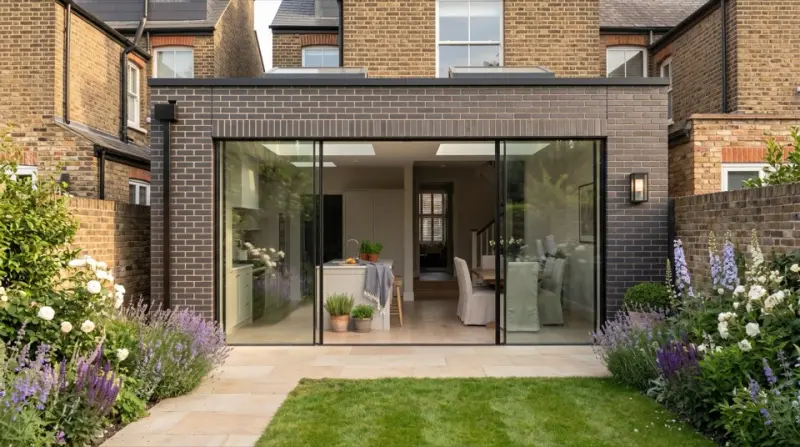
See it for your own home: put in your address and get free concept drawings and an indicative price. Get my free concept → Or see our House Extensions →
When UK homeowners look to add more living space, the two most popular options are a traditional brick extension and a conservatory. Both can transform how you use your home — but they come with very different price tags, planning requirements, and long-term value. In 2026, with construction costs stabilising after the post-pandemic volatility, understanding the true cost difference is more important than ever.
A single-storey rear extension in the UK typically costs £1,800–£2,800 per m², while a conservatory costs £1,200–£2,000 per m² based on indicative 2026 estimates. At first glance, conservatories look cheaper — but the full picture involves build quality, longevity, energy efficiency, and how each option affects your property value. This guide breaks down every cost factor so you can make the right decision for your budget and lifestyle.
Table of Contents
- Extension vs Conservatory: Which Costs More in 2026?
- Table of Contents
- Cost Breakdown: Extension vs Conservatory
- Extension Costs by Type and Size
- Conservatory Costs by Size and Style
- Location-Specific Pricing in 2026
- What Affects the Cost?
- Planning Permission Requirements
- Energy Efficiency and Running Costs
- Return on Investment: Which Adds More Value?
- How to Save Money on Your Project
- When to Choose an Extension
- When to Choose a Conservatory
- How Suddeco Can Help
- Frequently Asked Questions
Cost Breakdown: Extension vs Conservatory
| Cost Item | Extension (per m²) | Conservatory (per m²) |
|---|---|---|
| Minimum | £1,800 | £1,200 |
| Average | £2,300 | £1,600 |
| Maximum | £2,800 | £2,000 |
| Typical 20 m² project | £36,000–£56,000 | £24,000–£40,000 |
| Planning permission | £206 (householder) | £206 (householder) |
| Building regulations | £200–£1,000 | £200–£600 |
| Structural engineer | £500–£2,000 | £300–£800 |
| Architect fees | 5–10% of build cost | 3–5% of build cost |
| Party wall agreement | £700–£2,000 | Not usually required |
| Contingency (10–15%) | £3,600–£8,400 | £2,400–£6,000 |
Sources: HomeOwners Alliance; indicative Suddeco estimates
The table above shows that extensions are roughly 40–50% more expensive per m² than conservatories. However, extensions offer year-round usability, better thermal performance, and typically add more resale value. A conservatory, while cheaper upfront, may require additional heating, cooling, and maintenance costs over its lifetime.
For a typical 20 m² project, the all-in cost difference ranges from £12,000 to £16,000 — a significant gap that explains why some homeowners opt for conservatories despite their limitations.
Extension Costs by Type and Size
Extensions vary widely in price depending on type, size, and specification. Here are the most common categories in 2026:
Single-Storey Rear Extension: £1,800–£2,800 per m² A standard rear extension remains the most popular choice. A 20 m² kitchen extension at the average rate of £2,500 per m² would cost approximately £50,000, plus professional fees and VAT. Kitchen extensions at the higher end (£2,000–£3,000 per m²) include bespoke cabinetry, premium appliances, and higher-spec finishes.
Double-Storey Extension: £1,800–£2,500 per m² Adding a second storey is more cost-effective per m² than building single-storey because the foundation and roof costs are shared across a larger floor area. A 30 m² double-storey extension (15 m² per floor) at £2,200 per m² totals around £66,000.
Side Return Extension: £2,000–£3,000 per m² Side returns are common in Victorian and Edwardian terraced homes. They typically involve complex structural work, steel beams, and party wall agreements, which push costs toward the upper end.
Wrap-Around Extension: £2,000–£3,000 per m² Combining a rear and side return extension, wrap-around projects offer maximum space but are the most complex and expensive type.
Loft Conversion: £1,500–£2,500 per m² While not technically an extension, loft conversions are a popular alternative for adding space without extending the footprint. A typical dormer loft conversion costs £40,000–£60,000.
Conservatory Costs by Size and Style
Conservatories have evolved significantly in recent years. Modern designs use energy-efficient glass, solid roofs, and insulated frames — but costs vary by style and materials.
Lean-To Conservatory: £1,200–£1,800 per m² The simplest and most affordable style. A 10 m² lean-to conservatory costs £12,000–£18,000. Ideal for smaller properties with limited garden space.
Victorian Conservatory: £1,400–£2,000 per m² Characterised by a bay front and ornate detailing. A 15 m² Victorian conservatory costs £21,000–£30,000. The complex roof structure adds to labour costs.
Edwardian Conservatory: £1,300–£1,900 per m² Similar to Victorian but with a rectangular footprint, offering more usable floor space. A 15 m² Edwardian conservatory costs £19,500–£28,500.
Orangery: £2,000–£3,000 per m² Orangeries blur the line between conservatory and extension. They feature more brickwork, a solid roof, and are often considered a premium option. A 20 m² orangery can cost £40,000–£60,000 — comparable to a low-spec extension.
Solid Roof Upgrade: £5,000–£12,000 additional Replacing a traditional glass or polycarbonate roof with a solid tiled roof improves insulation and usability but adds significantly to the cost.
Location-Specific Pricing in 2026
Construction costs in the UK vary dramatically by region. Labour rates, material delivery costs, and local demand all play a role.
London Premium
London remains the most expensive region for home improvements. Build costs for extensions run 30–50% higher than the UK average. A single-storey extension that costs £46,000 in the Midlands could cost £60,000–£70,000 in London. Conservatories see a similar premium, though the gap is slightly narrower at 25–40%.
The premium is driven by: - Higher labour rates (skilled trades in London charge £250–£350/day vs £180–£250/day elsewhere) - Congestion and parking restrictions increasing logistics costs - Higher scaffolding and access equipment costs - Stricter building control and planning requirements
South East England
The South East (including Surrey, Kent, Berkshire, and Hampshire) carries a 20–30% premium over the national average. Proximity to London and high property values push up both labour and material costs. A 20 m² extension here typically costs £48,000–£60,000.
North England, Midlands, and Scotland
Northern England, the Midlands, and Scotland offer the most competitive pricing, with costs 10–20% below the UK average. A 20 m² extension in Manchester, Birmingham, or Glasgow might cost £38,000–£48,000. Labour rates are lower, and local builder competition keeps prices keen.
However, remote areas in Scotland and rural northern regions can see higher costs due to travel and material delivery distances, sometimes offsetting the regional discount.
What Affects the Cost?
Several factors can push your project toward the minimum or maximum end of the pricing spectrum. Understanding these helps you budget accurately and avoid surprises.
Size and Footprint
Larger projects benefit from economies of scale. The fixed costs (foundations, design, scaffolding, and professional fees) are spread over a larger area, reducing the cost per m². A 10 m² extension might cost £2,800 per m², while a 30 m² extension could drop to £2,000 per m². Conversely, very small projects (under 10 m²) are disproportionately expensive per m².
Materials and Finish
- Standard specification: uPVC windows, basic kitchen units, standard radiators, carpet or laminate flooring. Keeps costs at the lower end.
- Mid-range specification: Aluminium or timber windows, mid-range kitchen, underfloor heating, porcelain tiles. Pushes costs to the middle range.
- High specification: Bespoke joinery, premium kitchen (e.g., German or Italian brands), bi-fold doors, integrated smart home systems. Drives costs to the upper end or beyond.
For conservatories, material choice matters enormously. A uPVC frame with standard double glazing costs significantly less than an aluminium frame with self-cleaning, solar-control glass.
Location and Access
Restricted site access increases costs. If your home has: - Narrow alleyways or side passages - No rear garden access (common in London terraces) - Parking restrictions requiring permit suspensions - Overhead power lines or underground utilities
...expect to pay 10–20% more for the additional logistical complexity.
Complexity and Design
Projects requiring structural steelwork, underpinning, or complex drainage solutions cost more. Features that add complexity include: - Removing load-bearing walls - Creating open-plan spaces with steel beams - Basements or partial excavations - Unusual shapes or angles - Integration with existing drainage systems
Conservatories are generally simpler but can become complex if they involve connecting to existing structures, replacing existing walls, or dealing with stepped floor levels.
Planning Permission Requirements
Most single-storey rear extensions and conservatories fall under Permitted Development Rights (PDR), meaning no formal planning permission is required — provided they meet specific criteria:
Single-storey rear extension: Must not extend beyond the rear wall by more than 4m (detached) or 3m (other dwellings), and must be no higher than 4m.
Conservatory: Treated as an extension for PDR purposes. Must not cover more than 50% of the original garden area.
If your project exceeds PDR limits, or if your property is in a conservation area, Area of Outstanding Natural Beauty (AONB), or is a listed building, you will need householder planning permission — costing £206 in England.
A full planning application costs £462 and is rarely needed for standard residential extensions or conservatories.
Building regulations approval is required for both extensions and conservatories if they are habitable spaces. Budget £200–£1,000 for building control fees.
Energy Efficiency and Running Costs
This is where the cost comparison becomes more nuanced. A well-built extension with proper insulation, double glazing, and efficient heating is cheap to run. A conservatory, especially one with a glass or polycarbonate roof, can be expensive to heat in winter and difficult to cool in summer.
According to the HomeOwners Alliance, a conservatory with a traditional glass roof can lose up to 10 times more heat than a standard brick wall. This means higher energy bills and, in many cases, the space is unusable for several months of the year.
Modern solid-roof conservatories and orangeries close this gap significantly. A solid roof with proper insulation brings thermal performance closer to that of an extension — but at a higher upfront cost.
Return on Investment: Which Adds More Value?
Both extensions and conservatories can add value to your home, but extensions generally offer better returns.
- Extension: Typically adds 15–20% to property value, based on indicative 2026 estimates. A £50,000 extension could add £75,000–£100,000 to a £500,000 property.
- Conservatory: Adds 5–10% on average. A £30,000 conservatory might add £25,000–£50,000. However, poorly specified or outdated conservatories can actually detract from value.
The key factor is usability. Estate agents consistently report that buyers value usable, year-round space over seasonal rooms that are too hot in summer and too cold in winter.
How to Save Money on Your Project
- Use Permitted Development Rights: Avoid planning permission costs and delays where possible.
- Get multiple quotes: Obtain at least three detailed quotes from reputable builders. Suddeco's Design-to-Build service includes the build by our own team (London).
- Consider off-peak timing: Builders often offer better rates during quieter months (January–March).
- Choose standard sizes: Custom dimensions increase material waste and labour costs. Standard window and door sizes are cheaper.
- Phase the project: If budget is tight, build the shell first and fit out the interior later.
- Compare extension vs orangery: If you want a conservatory feel, an orangery might offer better value than a traditional extension.
- Get your design right first: Revisions during construction are expensive. Our free render service lets you visualise your project before committing.
When to Choose an Extension
Choose a traditional extension if: - You need year-round, usable living space - You want to add a kitchen, bedroom, or bathroom - Energy efficiency and low running costs are priorities - You want the highest possible return on investment - You need plumbing, heating, and full electrical integration - You plan to stay in the property long-term
When to Choose a Conservatory
Choose a conservatory if: - Budget is your primary constraint - You want a garden-facing room for occasional use - You prefer a lighter, more open feel with maximum natural light - You do not need permanent heating or plumbing - You are looking for a quick, less disruptive installation - You plan to sell within a few years and want a cost-effective improvement
How Suddeco Can Help
Deciding between an extension and a conservatory starts with understanding what is possible on your property. Suddeco's platform reads your UK address and instantly shows what your neighbours have built — with real designs, real costs, and real planning outcomes.
Start with a free render: Enter your address at Suddeco's free render page and receive an instant visualisation of your property with generated concept designs, priced plans, and a clear cost estimate. No obligation, no pressure.
In London, our Design-to-Build service is delivered by Suddeco’s own team — design, planning and the build itself, with project management, staged milestone payments and a 12-month warranty.
Whether you choose an extension or a conservatory, getting the design right before you build is the single best way to save money and avoid costly mistakes. Start your free render today.
Frequently Asked Questions
Is an extension always more expensive than a conservatory?
Yes, extensions are typically 40–50% more expensive per m². However, they offer better year-round usability, energy efficiency, and property value growth. A high-spec orangery can cost as much as a basic extension.
Do I need planning permission for a conservatory?
Not always. Most conservatories fall under Permitted Development Rights if they meet size and height limits. If your property is in a conservation area or is a listed building, planning permission may be required. Learn more in our planning permission cost guide.
How much does a 20 m² extension cost in 2026?
A 20 m² single-storey rear extension costs approximately £36,000–£56,000, depending on location, specification, and complexity. In London, expect £50,000–£75,000.
What is the cheapest type of conservatory?
A lean-to conservatory is the most affordable, costing £1,200–£1,800 per m². A 10 m² lean-to starts at around £12,000.
Does a conservatory add value to a house?
A well-designed conservatory can add 5–10% to your property value. However, poorly specified or outdated conservatories may not add value and can even deter buyers.
Can I turn a conservatory into an extension?
Yes, by replacing the glass roof with a solid roof, adding proper insulation, and upgrading the foundations. This is essentially converting the conservatory into an orangery. Costs range from £15,000–£30,000 for the conversion.
What is the difference between an orangery and a conservatory?
An orangery has more brickwork, a solid roof, and is generally considered more permanent than a conservatory. Orangeries cost £2,000–£3,000 per m², closer to extension pricing than traditional conservatory pricing.
How long does it take to build an extension vs a conservatory?
A single-storey extension typically takes 8–14 weeks. A conservatory can be installed in 2–4 weeks. Complex extensions or those requiring planning permission can take 4–6 months including design and approval time.
Are there hidden costs with conservatories?
Yes. Common hidden costs include: connecting to existing heating systems (£1,000–£3,000), upgrading foundations if the existing ones are inadequate (£2,000–£5,000), and ongoing heating/cooling costs due to poor insulation.
Can I build an extension or conservatory myself to save money?
DIY construction is possible but not recommended for structural work. You can save money by doing your own painting, tiling, or landscaping. However, foundations, structural work, electrics, and plumbing must be done by qualified professionals and signed off by building control.
Does location really affect the price by that much?
Yes. London and the South East see premiums of 20–50% above the national average. Northern England and Scotland are typically 10–20% cheaper. Always get local quotes for accurate pricing.
What is the best way to get an accurate quote?
Start with a detailed design and specification. Our free render service generates architect-quality concept drawings and priced designs based on your specific address and local build rates.
See it before you spend a penny
Get a free render of your finished project + a real price — in minutes.
Get your free concept →