Kitchen Extension & Loft Conversion Cost in Reading 2026: The Complete Guide
Last updated: 21 September 2026
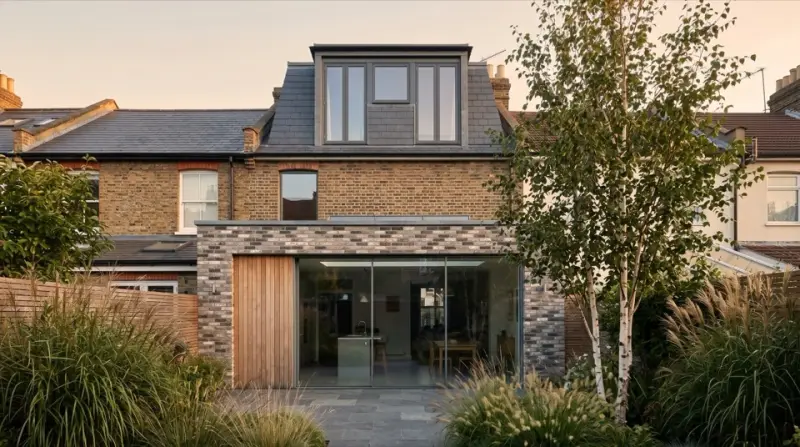
See it for your own home: put in your address and get free concept drawings and an indicative price. Get my free concept → Or see our Loft Conversions →
If you are a homeowner in Reading and you are pricing a kitchen extension or loft conversion in 2026, you are probably working with a spreadsheet and a growing sense of uncertainty. You have seen national cost guides. You have heard figures from neighbours in Caversham or Earley. But what will your project actually cost — here, in Reading, with Reading builders, Reading planning rules, and the property market of the Thames Valley?
In 2026, a kitchen extension in Reading costs between £2,200 and £3,500 per square metre all-in, including construction, VAT at 20%, professional fees, and a sensible contingency. A loft conversion in Reading costs between £1,800 and £2,800 per square metre all-in, depending on type and finish. For a typical 20 m² kitchen extension, budget £50,000–£75,000. For a standard 30 m² dormer loft conversion, budget £55,000–£85,000. Do both, and you are looking at £105,000–£160,000 for a genuinely transformed home.
All prices in this guide include VAT at 20% on labour and materials unless stated otherwise. Some professional fees are VAT-exempt — we flag these where relevant.
Reading sits firmly in the South East cost bracket. Labour rates here are 20–30% above the national average, driven by commuter demand, proximity to London, and a buoyant property market. At the same time, Reading has a large pool of experienced builders — many of whom commute in from surrounding towns — which keeps competition healthier than in the capital itself.
This guide breaks down exactly what kitchen extensions and loft conversions cost in Reading, what Reading Borough Council expects from planning applications, how local factors (soil, conservation areas, terraced housing) affect pricing, and how to budget accurately before you invite builders to quote.
Table of Contents
- Kitchen Extension Cost in Reading
- Loft Conversion Cost in Reading
- Cost of Doing Both Together
- Reading vs. National & London Prices
- What Drives Costs in Reading Specifically?
- Hidden Costs to Budget For
- Planning Permission: Reading Borough Council Rules
- How to Save Money Without Cutting Corners
- Extension & Loft Conversion vs. Moving House in Reading
- How Suddeco Homes Helps Reading Homeowners
- Frequently Asked Questions
Kitchen Extension Cost in Reading
A kitchen extension is the most popular home improvement project in Reading. The town has a large stock of Victorian terraces, 1930s semis, and post-war estates where the original kitchen is too small for modern family life. Extending into the rear garden to create a kitchen-diner with bi-fold doors and a roof lantern is the standard aspiration — and the standard budget reflects that.
Cost per m² by Finish Level (Reading, 2026)
| Finish Level | Cost per m² (construction only, inc. VAT) | Cost per m² (all-in, inc. VAT) | Typical Specification |
|---|---|---|---|
| Budget | £1,900–£2,300 | £2,200–£2,700 | Standard materials, minimal glazing, simple flat roof, basic windows and doors, no structural complexity |
| Mid-range | £2,300–£2,800 | £2,700–£3,300 | Quality materials, bi-fold or sliding doors, roof lantern, good insulation, matching brickwork |
| Premium | £2,800–£3,500+ | £3,300–£4,200+ | High-end materials, extensive glazing, complex roof, underfloor heating, architectural details, bespoke kitchen |
Typical total project costs for Reading:
| Extension Size | Budget (All-In) | Mid-Range (All-In) | Premium (All-In) |
|---|---|---|---|
| 15 m² | £35,000–£43,000 | £43,000–£52,000 | £52,000–£65,000 |
| 20 m² | £46,000–£56,000 | £56,000–£68,000 | £68,000–£86,000 |
| 25 m² | £57,000–£70,000 | £70,000–£85,000 | £85,000–£107,000 |
| 30 m² | £68,000–£83,000 | £83,000–£101,000 | £101,000–£128,000 |
All-in totals include construction, VAT at 20%, professional fees, and a 10% contingency. They do not include kitchen units, appliances, or worktops, which typically add £8,000–£25,000 depending on specification.
What Is Included in the Construction Cost?
- Foundations: Strip or trench fill foundations to standard depth
- External walls: Cavity walls with insulation, brick or rendered block facing to match existing
- Roof structure: Flat roof with single-ply membrane, or pitched roof with tiles; fascias, soffits, gutters
- Windows and external doors: Standard double glazing; bi-fold or sliding doors if specified
- Internal walls: Stud partitions, plasterboard, plaster finish
- Electrical work: First and second fix, sockets, lighting, consumer board upgrade if required
- Plumbing: First and second fix, hot and cold feeds, waste pipes, radiator connections
- Floor construction: Concrete slab or suspended floor, insulation, screed
- Ceiling and decoration: Plasterboard ceiling, plaster finish, white emulsion
- VAT at 20%: Included in all figures above
What Is NOT Included?
| Item | Cost Range (inc. VAT) | Notes |
|---|---|---|
| Kitchen units and appliances | £8,000–£25,000+ | Howdens, Magnet, or bespoke; appliances extra |
| Worktops | £1,500–£5,000 | Laminate to quartz/granite |
| Tiling (floor and walls) | £1,500–£5,000 | Premium tiles and mosaic work cost more |
| Glazing upgrades (bi-folds, roof lantern) | £3,000–£10,000 | Often the biggest single upgrade |
| Underfloor heating | £1,500–£4,000 | Electric mats or wet system |
| Structural engineer | £500–£2,000 | Required for most projects |
| Architect / designer | £2,500–£7,500 | 5–10% of construction cost |
| Planning permission | £206–£462 | Householder or full application |
| Building regulations | £200–£1,000 | Local authority or private inspector |
| Party wall surveyor | £700–£2,000 | Required if you share a wall with a neighbour |
| External works (patio, drainage) | £2,000–£8,000 | Connecting drains, landscaping |
| Contingency | 10–15% of construction cost | Essential buffer |
Loft Conversion Cost in Reading
A loft conversion is the second most popular project in Reading, particularly in areas like Caversham, Emmer Green, and Tilehurst where semis and detached homes dominate. With average property prices making upsizing expensive, converting the loft into a bedroom, home office, or master suite with en-suite is often the most cost-effective way to add space.
Cost by Conversion Type (Reading, 2026)
| Conversion Type | Cost per m² (inc. VAT) | Total Cost (Typical Size) | Notes |
|---|---|---|---|
| Velux (Rooflight) | £1,500–£2,000 | £30,000–£40,000 (20 m²) | Simplest option; windows into existing roof slope |
| Dormer | £1,800–£2,500 | £54,000–£75,000 (30 m²) | Most popular; maximises usable space |
| Hip-to-Gable | £2,000–£2,800 | £70,000–£98,000 (35 m²) | Extends hip into vertical gable wall |
| Mansard | £2,200–£3,000 | £88,000–£120,000 (40 m²) | Most space; usually requires planning permission |
| Shell-Only | £1,200–£1,800 | £24,000–£36,000 (20 m²) | Structural work, insulation, electrics, basic plastering |
Cost by Size (Dormer Conversion, Mid-Range Finish)
| Size | Low Estimate (inc. VAT) | High Estimate (inc. VAT) |
|---|---|---|
| 20 m² | £36,000 | £52,000 |
| 30 m² | £54,000 | £78,000 |
| 40 m² | £72,000 | £104,000 |
These figures include construction, materials, labour, and standard finishes. They do not include professional fees, planning costs, or premium fixtures such as bathrooms or bespoke storage.
Additional Loft-Specific Costs
| Item | Cost Range (inc. VAT) | Notes |
|---|---|---|
| Staircase (straight flight) | £1,000–£2,500 | Standard design |
| Staircase (spiral / bespoke) | £3,000–£7,000 | For tight spaces or design statements |
| Velux windows (each) | £800–£1,500 | Supplied and fitted |
| Dormer windows | £1,500–£3,000 | Depending on size and style |
| Bathroom / en-suite | £5,000–£12,000 | Plumbing runs and soil pipe routing critical |
| Trussed roof alteration | £3,000–£8,000 | Homes built after 1965 often have trusses |
| Floor structure reinforcement | £1,500–£5,000 | Required if existing joists are inadequate |
Cost of Doing Both Together
Many Reading homeowners combine a kitchen extension with a loft conversion — either sequentially or as part of a single build contract. There are economies of scale: scaffolding, site setup, and project management costs are shared.
| Project Combination | Construction Only (inc. VAT) | All-In with Fees & Contingency (inc. VAT) |
|---|---|---|
| 20 m² kitchen extension + 20 m² Velux loft | £68,000–£86,000 | £85,000–£110,000 |
| 25 m² kitchen extension + 30 m² dormer loft | £95,000–£125,000 | £120,000–£160,000 |
| 30 m² kitchen extension + 35 m² hip-to-gable | £120,000–£160,000 | £150,000–£200,000 |
Why doing both together can save money: - Shared scaffolding: £1,000–£3,000 saved - Shared site setup and skip hire: £500–£1,500 saved - Single project manager: reduces coordination overhead - Single building regulations application: £200–£500 saved - Combined architect fees: often 15–20% lower than separate commissions
The trade-off: Living through two simultaneous major builds is disruptive. Most homeowners move out for 4–8 weeks during the noisiest phase. Budget £2,000–£5,000 for temporary accommodation if needed.
Reading vs. National & London Prices
Reading sits in the South East labour market — close enough to London to feel the wage pressure, far enough to avoid the worst of the capital's premiums.
| Location | Kitchen Extension (per m², all-in) | Loft Conversion (per m², all-in) | Premium vs. National Average |
|---|---|---|---|
| National average | £2,000–£2,800 | £1,500–£2,200 | Baseline |
| Reading / Berkshire | £2,200–£3,300 | £1,800–£2,600 | +15–25% |
| London (Outer) | £2,500–£3,800 | £2,000–£3,000 | +25–40% |
| London (Central) | £3,000–£4,500+ | £2,500–£3,500+ | +40–60% |
| Midlands / North | £1,700–£2,400 | £1,300–£1,900 | -10–20% |
Why Reading costs more than the national average: - Labour rates: Skilled trades in the Thames Valley earn 15–25% more than the Midlands or North - Commuter premium: Many contractors work in London part of the week and price Reading jobs at near-London rates - Material delivery: Slightly higher transport costs than central hubs, though less than rural areas - Property values: Higher home values mean homeowners invest more in premium finishes, which raises average project costs
Why Reading costs less than London: - Parking and access: Fewer congestion zone and parking permit issues than London boroughs - Competition: A larger pool of local builders than central London, with firms based in Wokingham, Bracknell, and Basingstoke competing for work - Planning complexity: Reading Borough Council is generally pragmatic; fewer conservation area restrictions than Kensington or Camden
What Drives Costs in Reading Specifically?
Several local factors push your Reading project toward the top or bottom of the price range.
1. Property Type and Era
Reading's housing stock varies dramatically by neighbourhood:
| Area | Typical Property | Cost Implication |
|---|---|---|
| Caversham / Emmer Green | 1930s semis, detached | Straightforward access; often room for rear and side extensions |
| New Town / Katesgrove | Victorian terraces | Narrow access; party wall agreements common; side returns popular |
| Tilehurst / Purley | Post-war semis, estates | Standard construction; often trussed roofs (post-1965) |
| Earley / Winnersh | 1970s–1990s estates | Good garden space; often simpler planning context |
Victorian terraced houses in Katesgrove or the New Town often require party wall agreements with both neighbours, adding £700–£2,000 and 4–6 weeks to the pre-construction phase. They may also have narrow side returns, making a wrap-around extension complex but highly rewarding.
2. Soil and Ground Conditions
Much of Reading sits on London Clay, a shrink-swell soil that can affect foundations. In summer droughts, clay soils shrink; in wet winters, they expand. This means: - Foundations may need to be deeper than standard (1.2–1.5 m rather than 1 m) - Trees within 10 m of the extension can require root protection or deeper foundations - A structural engineer's assessment is essential — budget £500–£2,000
Properties closer to the River Thames or the Kennet may encounter higher water tables, which can complicate drainage and foundation design.
3. Conservation Areas and Listed Buildings
Reading has 16 conservation areas, including Castle Hill, Coley, Katesgrove, and parts of Caversham. If your property is in a conservation area, permitted development rights may be restricted. You may need: - Full planning permission rather than permitted development: £462 vs. £0 - Additional design justification and materials matching - Longer planning timelines: 12–16 weeks rather than 8–12 weeks
There are also over 350 listed buildings in Reading. If your home is listed, you will need listed building consent in addition to planning permission — a more complex and costly process.
4. Parking and Access
Properties in central Reading (RG1) or dense parts of Caversham may have limited parking for contractors and material deliveries. Builders may factor in: - Resident parking permit costs - Materials delivery restrictions - Skip placement on public roads (Reading Borough Council permit required)
Budget an extra £200–£500 for access-related costs if you are in a controlled parking zone.
5. Finish Quality Expectations
Reading homeowners typically expect a mid-range to premium finish. The town has a well-educated, professional demographic — many working in tech, finance, or pharmaceuticals — and homes are often renovated to a high standard for long-term family living. This pushes average spend toward the upper end of the cost ranges.
Hidden Costs to Budget For
Many homeowners focus on the build cost and forget the extras. In Reading, these add up quickly.
| Cost Item | Typical Price Range | VAT Status | Notes |
|---|---|---|---|
| Planning permission (householder) | £206 | Exempt | Required if exceeding permitted development |
| Planning permission (full application) | £462 | Exempt | Required in conservation areas or for complex designs |
| Lawful Development Certificate | £103 | Exempt | Recommended even for permitted development projects |
| Building regulations approval | £200–£1,000 | Exempt or 20% | Reading Borough Council or private inspector |
| Party wall agreement (per neighbour) | £700–£2,000 | 20% VAT applicable | Common for terraced and semi-detached properties |
| Structural engineer | £500–£2,000 | 20% VAT applicable | Essential for most extensions and all loft conversions |
| Architect / designer | £2,500–£7,500 | 20% VAT applicable | 5–10% of construction cost |
| Thames Water build-over agreement | £300–£1,500 | 20% VAT applicable | Required if building over or near public sewers |
| Tree protection order compliance | £300–£1,000 | 20% VAT applicable | If trees with TPOs are near the build |
| Scaffolding | £1,000–£3,000 | 20% VAT included | May be shared if doing both extension and loft |
| Site clearance and preparation | £500–£3,000 | 20% VAT included | Removing old structures, asbestos surveys |
| Asbestos survey | £200–£500 | 20% VAT applicable | Essential for pre-2000 properties |
| Temporary relocation | £1,500–£5,000 | N/A | If doing both projects simultaneously |
| Contingency fund | 10–15% of total budget | Included in build VAT | Essential for unexpected issues |
A sensible approach: Add 15–20% on top of your quoted build cost to cover fees, contingencies, and unexpected issues like rotten roof timbers, asbestos, or deeper-than-expected foundations.
Planning Permission: Reading Borough Council Rules
Understanding Reading Borough Council's planning framework is essential for budgeting accurately. The council has specific policies and local plan requirements that affect extensions and loft conversions.
Permitted Development in Reading
Many kitchen extensions and loft conversions fall under permitted development rights, meaning you do not need full planning permission if you meet national criteria:
For rear extensions: - Single storey - Maximum depth: 4 m (detached) or 3 m (other houses) from original rear wall - Maximum height: 4 m - Materials similar to existing house - Not on designated land (national parks, AONBs, conservation areas with Article 4 restrictions)
For loft conversions: - Additional volume less than 40 m³ (terraced) or 50 m³ (detached/semi) - Does not exceed height of existing roof - Side-facing windows are obscure-glazed and non-opening (or open above 1.7 m) - No verandas, balconies, or raised platforms
Important: Even if your project falls under permitted development, we strongly recommend applying for a Lawful Development Certificate (£103). This document is essential when you sell your home and protects you if council policies change.
Reading-Specific Considerations
Conservation Areas: Reading has 16 conservation areas. If your property is within one, permitted development rights may be restricted or removed entirely. Areas include: - Castle Hill - Coley - Katesgrove - New Town - Old Tilehurst - Parts of Caversham
If you are in a conservation area, you will likely need householder planning permission (£206) and may face stricter design requirements, including materials matching and roof form preservation.
Article 4 Directions: Some parts of Reading have Article 4 Directions that remove permitted development rights entirely. Check the Reading Borough Council planning portal with your postcode before assuming permitted development applies.
Local Plan Policy: Reading's Local Plan emphasises sustainable design, energy efficiency, and maintaining the character of residential areas. Proposals that demonstrably improve energy performance (e.g., high insulation, solar panels) are viewed favourably.
Building Regulations
All extensions and loft conversions must comply with Building Regulations, covering: - Structural integrity - Thermal insulation (U-values) - Fire safety - Ventilation - Drainage - Electrical safety
You will need either a Building Notice or Full Plans Approval. For extensions and loft conversions, Full Plans Approval is recommended — it provides certainty before work begins. Cost: £200–£1,000 depending on your local authority.
Our Design + Planning package includes the planning application, building regulations, structural engineer calculations, and unlimited revisions — all for a fixed fee of £2,495 (inc. VAT).
How to Save Money Without Cutting Corners
1. Choose the Right Project for Your Property
Not every home needs both an extension and a loft conversion. If your kitchen is adequate but you need an extra bedroom, a loft conversion alone may be the better investment. If your loft is too low (under 2.2 m at the highest point), a kitchen extension is the logical choice.
2. Get Multiple Quotes from Local Builders
We recommend obtaining at least three detailed quotes from reputable builders. Prices for the same scope can vary by 20–30% between firms. Ensure all quotes clearly state whether they include VAT at 20%. Ask for local references — preferably projects in Reading or Berkshire completed within the last 12 months.
3. Consider a Shell-Only Build
For loft conversions, a shell-only build (structural work, insulation, electrics, plastering) lets you fit out the interior later. This spreads costs over time and allows you to DIY decoration, flooring, and built-in storage.
4. Use Standard Materials
Bespoke handmade bricks, imported tiles, and custom steelwork look beautiful but inflate the budget. Standard ranges from UK merchants (Travis Perkins, Jewson, Wickes) offer excellent quality at significantly lower prices.
5. Plan for Permitted Development
If your project falls within permitted development rights, you avoid the cost and delay of a full planning application. Our platform checks this instantly for your address — try your free render.
6. Build in the Off-Season
Builders in Reading are often quieter in January and February. Booking during these months can secure a 5–10% discount compared to the spring and summer peak season, when demand is highest.
7. Optimise Your Design
A simple rectangular extension is the most cost-effective shape. Every external corner, jog, or bay window adds wall, roof, and foundation cost. Work with a designer who understands cost-efficient design — our Concept Package delivers three optimised designs in 48 hours.
8. Share Scaffolding Across Projects
If you are doing both a kitchen extension and a loft conversion, schedule them together to share scaffolding costs. Erecting scaffolding twice costs significantly more than doing it once.
Extension & Loft Conversion vs. Moving House in Reading
For many Reading families, the choice is between renovating and relocating. The numbers often favour staying put — especially given Reading's property market.
| Expense | Moving House (Reading average) | Kitchen Extension + Loft Conversion |
|---|---|---|
| Stamp duty (on £450,000 purchase) | £7,500 | £0 |
| Estate agent fees (2% on sale) | £7,000–£9,000 | £0 |
| Legal fees (buy and sell) | £2,500–£4,000 | £206–£462 |
| Removals | £1,000–£3,000 | £0 |
| Mortgage arrangement fees | £1,000–£2,000 | £0 |
| Total moving costs | £19,000–£27,000 | £206–£462 |
| Renovation cost (inc. VAT) | N/A | £105,000–£160,000 |
| New mortgage (if upsizing) | £100,000–£200,000+ | £0 |
Property value uplift: According to the HomeOwners Alliance, a kitchen extension typically adds 10–15% to a property's value, while a loft conversion adds 15–20%. On a £400,000 Reading home, that is £100,000–£140,000 in added equity — often covering a significant portion of the renovation cost.
In Reading's competitive property market, where good family homes in Caversham, Earley, or Emmer Green are in short supply, renovating also avoids the stress of bidding wars, school catchment changes, and the disruption of moving.
How Suddeco Homes Helps Reading Homeowners
Traditional renovation projects involve months of back-and-forth with architects, weeks waiting for quotes, and uncertainty about what is actually possible on your property. Our platform changes that.
Step 1: Enter your Reading address. Our platform analyses nearby approved planning applications from Reading Borough Council to understand what your local authority has already permitted on similar homes — including extensions in your street, loft conversions in your neighbourhood, and any conservation area constraints.
Step 2: Receive an instant render, floor plans, and a cost estimate tailored to Reading prices — completely free. No appointment, no waiting, no commitment.
Step 3: Choose your package. Our Concept Package delivers three renders, full plans, and one revision within 48 hours for £495–£995 (inc. VAT). Our Design + Planning package handles the full planning application, building regulations, and structural engineering for £2,495 (inc. VAT).
Step 4: Build with confidence. Suddeco builds in London; here we prepare the drawings, the planning application and a priced scope of works that any builder can quote against.
Get your free Reading renovation render today →
Frequently Asked Questions
How much does a kitchen extension cost in Reading?
In 2026, a kitchen extension in Reading costs £2,200–£3,300 per square metre all-in, including VAT at 20%, professional fees, and contingency. A typical 20 m² kitchen extension costs £50,000–£75,000 all-in, excluding kitchen units and appliances. (Indicative estimate, adjusted for South East premium)
How much does a loft conversion cost in Reading?
A loft conversion in Reading costs £1,800–£2,600 per square metre all-in in 2026. A standard 30 m² dormer loft conversion costs £55,000–£85,000 including VAT. Prices are 15–25% above the national average due to South East labour rates. (Indicative estimate)
Is it cheaper to do a kitchen extension and loft conversion together?
Yes, doing both projects together typically saves £3,000–£8,000 through shared scaffolding, site setup, and project management costs. A combined 20 m² kitchen extension and 30 m² dormer loft conversion in Reading costs approximately £120,000–£160,000 all-in.
Do I need planning permission for an extension in Reading?
Many extensions in Reading fall under permitted development rights and do not require full planning permission, provided they meet size and height limits. However, if you live in a conservation area (Reading has 16), a listed building, or an area with an Article 4 Direction, you will need householder planning permission (£206). Always check the Reading Borough Council planning portal or use our free render tool for an instant assessment.
How long does a kitchen extension take in Reading?
A single-storey kitchen extension in Reading takes 10–14 weeks from start to finish. Planning and design add another 8–12 weeks before construction begins. If building regulations approval is required, allow extra time for inspections.
How long does a loft conversion take in Reading?
A standard dormer loft conversion takes 6–10 weeks from start to finish. A Velux conversion takes 4–6 weeks, while a complex mansard conversion can take 10–14 weeks. Planning and design add 4–8 weeks before construction begins.
What is the cheapest way to extend my kitchen in Reading?
The cheapest option is a single-storey rear extension with a budget finish: standard materials, minimal glazing, simple flat roof, basic windows and doors. In Reading, this costs approximately £1,900–£2,300 per m² for construction, or £35,000–£43,000 all-in for 15 m². Building in winter and obtaining multiple quotes can reduce costs further.
Will a kitchen extension or loft conversion add value to my Reading home?
Yes. A kitchen extension typically adds 10–15% to property value, while a loft conversion adds 15–20%, according to the HomeOwners Alliance. On a £400,000 Reading home, that is £100,000–£140,000 in added equity — often more than the combined cost of both projects.
What is the difference between permitted development and planning permission in Reading?
Permitted development allows certain extensions and loft conversions to proceed without a full planning application, provided they meet national criteria. Planning permission requires a formal application to Reading Borough Council with detailed drawings and justification. Permitted development is faster (no 8–12 week wait) and cheaper (£0 vs. £206–£462), but not all properties qualify.
How much are architect fees in Reading?
Architect fees in Reading typically range from 5–10% of construction cost, or £2,500–£7,500 for a typical extension or loft conversion. Our Design + Planning package is a fixed £2,495 (inc. VAT), including planning application, building regulations, structural engineer, and unlimited revisions.
Do I need a party wall agreement in Reading?
If your property is attached to a neighbour's house (terraced or semi-detached) and the work affects a shared wall, or if excavation is within 3 metres of their foundations, you must serve a party wall notice. A party wall agreement typically costs £700–£2,000 per neighbour and is common in Reading's terraced areas like New Town and Katesgrove.
Does VAT apply to extensions and loft conversions in Reading?
Yes. VAT at the standard rate of 20% applies to labour and materials for most renovation work on existing homes in Reading. All prices in this guide include VAT unless stated otherwise. New-build projects may qualify for zero-rated VAT, but this does not apply to extensions or loft conversions on existing properties.
Can I get an extension or loft conversion under £40,000 in Reading?
A small Velux loft conversion or a very small kitchen extension with a budget finish may come in under £40,000 in Reading, but this is at the lower end of the market. For example, a 15 m² kitchen extension with budget finishes might cost £35,000–£40,000 all-in. Be wary of quotes significantly below market rate — they often exclude essential elements, VAT, or use unqualified labour.
What are Reading's conservation areas and how do they affect my project?
Reading has 16 conservation areas, including Castle Hill, Coley, Katesgrove, New Town, and Old Tilehurst. If your property is in a conservation area, permitted development rights may be restricted, and you may need full planning permission with materials and design that match the area's character. Check the Reading Borough Council website or our free render tool to see if your property is affected.
How do I find a good builder in Reading?
Look for builders who: - Are members of a recognised trade body or TrustMark - Have completed recent projects in Reading or Berkshire - Provide detailed, VAT-inclusive quotes - Offer references from local clients - Have experience with Reading Borough Council planning processes
Outside London, our drawings and priced scope give your builder something exact to quote against.
What soil conditions should I be aware of in Reading?
Much of Reading sits on London Clay, which shrinks in drought and expands when wet. This can affect foundation design, particularly if trees are nearby. A structural engineer's assessment (£500–£2,000) is essential to determine the correct foundation depth and any root protection measures required.
Should I move out during my extension or loft conversion?
For a loft conversion, most homeowners stay in the property. For a kitchen extension, you can usually stay but will need a temporary kitchen setup. If you are doing both projects simultaneously, many families move out for 4–8 weeks during the most disruptive phase. Budget £1,500–£5,000 for temporary accommodation if needed.
How much does a kitchen extension with bi-fold doors cost in Reading?
A 20 m² kitchen extension with aluminium bi-fold doors (3–4 m width) and a roof lantern costs £55,000–£75,000 all-in in Reading. The bi-fold doors and roof lantern typically add £5,000–£10,000 to the base construction cost but significantly improve natural light and connection to the garden.
What is included in a standard loft conversion quote in Reading?
A standard quote typically includes: structural alterations, insulation, electrics, lighting, plastering, flooring, windows, and a staircase — all with VAT at 20% included. It usually excludes: bathroom fitting, bespoke joinery, furniture, and decoration. Always ask for a detailed breakdown and confirm whether VAT is included.
Last updated: 9 July 2026. Cost figures are based on industry data from the HomeOwners Alliance, adjusted for South East England labour rates and 2026 market conditions. All prices include VAT at 20% on labour and materials unless stated otherwise. Prices vary by exact location within Reading, specification, and contractor. Always obtain detailed quotes before committing to a project. Planning information is based on Reading Borough Council policies as of July 2026 — always verify current requirements on the council's planning portal.
Related Articles
- Rear Extension Cost per m²: The Complete 2026 UK Guide
- Loft Conversion Cost: 2026 UK Prices + VAT
- Side Return Extension Cost: 2026 Pricing Guide
- Planning Permission Cost and Timeline 2026
- How Much Does a Two-Storey Extension Cost? (2026 UK Guide)
- Suddeco Pricing and Packages
See it before you spend a penny
Get a free render of your finished project + a real price — in minutes.
Get your free concept →