1. Control the inputs
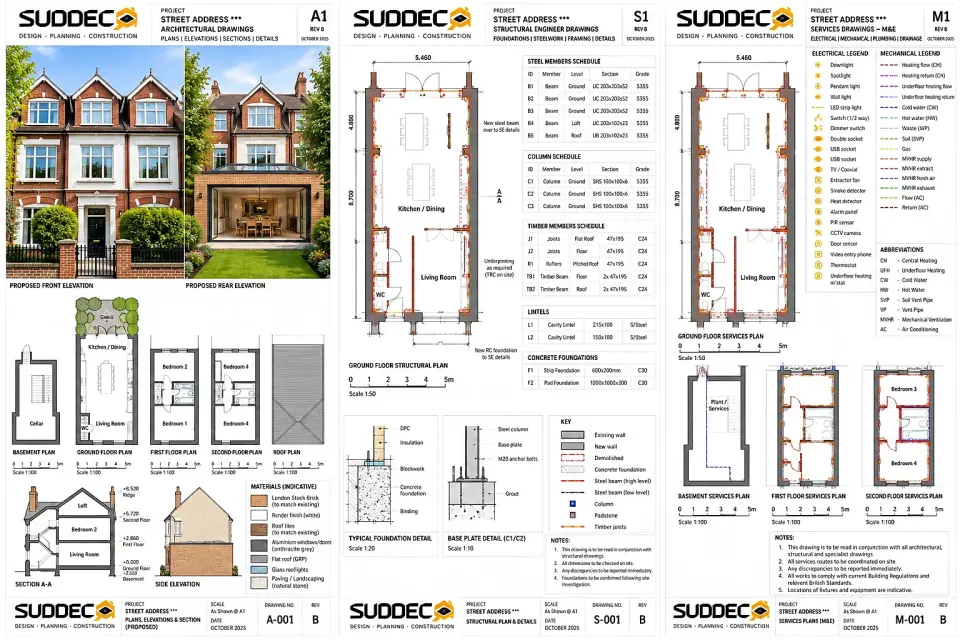
Record drawing titles, revision dates, scales and schedules before you begin measuring.
Practical pre-pricing checklist
Last updated: 21 September 2026
See it for your own home: put in your address and get free concept drawings and an indicative price. Get my free concept → Or see our Home Renovation →
This copy-and-use template helps organise the review. It is a general guide, not a substitute for project-specific measurement, technical review or commercial judgement.
Use the templateRecord drawing titles, revision dates, scales and schedules before you begin measuring.
Use a repeatable order such as preliminaries, structure, envelope, internal work and services.
Mark missing information, provisional quantities and design queries separately from measured items.
Template
Project: [insert] · Drawing set/revision: [insert] · Prepared by/date: [insert]
| Work package | Item and measurement rule | Quantity / unit | Assumption or query |
|---|---|---|---|
| Preliminaries | Access, protection, temporary works | [insert] | [insert] |
| Groundworks / structure | Excavation, concrete, steel, timber | [insert] | [insert] |
| Envelope | Walls, roof, openings, insulation | [insert] | [insert] |
| Internal work | Partitions, finishes, joinery | [insert] | [insert] |
| Services | Electrical, plumbing, heating, ventilation | [insert] | [insert] |
Record the net measured quantity and make any waste or procurement allowance explicit, so another reviewer can understand the basis used.
Do not assume a scale is reliable. Flag the issue, seek confirmed dimensions or use the appropriate project information before relying on a measurement.
Update it when the relevant project information changes, keeping the source revision and the impact of the change visible.
Begin with the address and concept so the work you need to measure is grounded in a real project brief.
Explore my address