Bathroom Renovation Cost UK: What It Means in London
Last updated: 3 October 2026
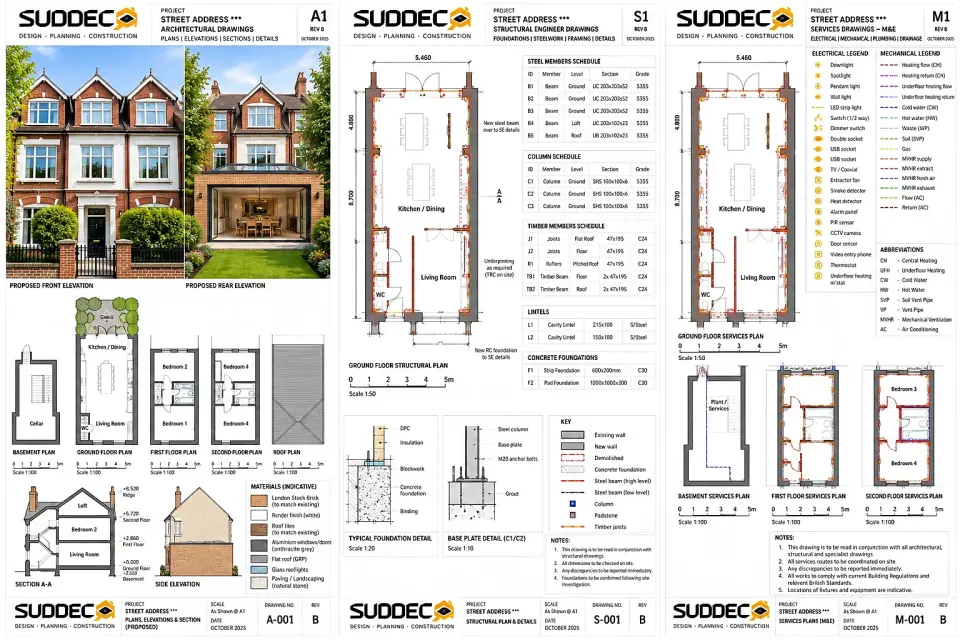
See it for your own home: put in your address and get free concept drawings and an indicative price. Get my free concept → Or see our Bathrooms →
Most bathroom cost guides published in the UK quote a national average: £5,000–£10,000 for a standard family bathroom including VAT, covering strip-out, plumbing, electrics, tiling, a mid-range suite and fitting. That figure is genuinely useful as a benchmark. It is also, for anyone building in Greater London, roughly 25–40% too low.
This guide does two things. It sets out the UK-wide numbers honestly, so you can see how they are built. Then it shows what changes when the address is in London, and how to translate a national figure into a budget you can actually rely on. Every figure is an indicative 2026 estimate including VAT at 20% unless stated, and all ranges are built from published component costs.
The UK bathroom renovation cost benchmark
| Project type | Budget (inc. VAT) | Mid-range (inc. VAT) | Premium (inc. VAT) |
|---|---|---|---|
| Cloakroom / downstairs WC | £1,500–£3,000 | £3,000–£5,000 | £5,000–£8,000 |
| Small bathroom (4–6 m²) | £3,000–£5,000 | £5,000–£9,000 | £9,000–£18,000 |
| Medium bathroom (6–10 m²) | £4,500–£7,000 | £7,000–£13,000 | £13,000–£25,000 |
| Large bathroom (10+ m²) | £6,000–£9,000 | £9,000–£16,000 | £16,000–£30,000+ |
| Wet room | £4,000–£7,000 | £7,000–£15,000 | £15,000–£30,000+ |
| En-suite renovation (existing) | — | £3,000–£8,000 | — |
| New en-suite from bedroom space | — | £5,500–£14,000 | — |
Three simple specifications sit behind those bands, and the difference between them is largely what you can see:
- Budget — £1,500–£5,000. Close-coupled WC, pedestal basin and acrylic bath (a three-piece suite costs £400–£800), budget ceramic tiles at £10–£20/m², an electric shower or basic mixer over the bath, a standard radiator, basic LED downlights. About 5–7 working days on site.
- Mid-range — £5,000–£10,000. New suite at £1,200–£2,500, full tiling, layout retained or lightly adjusted, upgraded lighting and extraction, better brassware. The most common choice.
- Premium — £10,000–£20,000+. Freestanding bath, walk-in shower, underfloor heating, natural stone or large-format porcelain, designer sanitaryware at £3,000–£8,000, possibly layout changes.
Where the national average comes from
The headline £5,000–£10,000 is not arbitrary. It is the sum of trades and materials at national rates. The components are worth seeing, because they are what change regionally — and the materials barely change at all.
| Component | National range (inc. VAT) |
|---|---|
| Strip-out, skip and waste disposal | £200–£500 |
| Sanitaryware suite (mid-range) | £1,200–£2,500 |
| Brassware, shower and screen | £600–£2,000 |
| Tiling (15–30 m² of wall, plus floor) | £1,000–£4,000 |
| Plumbing labour | £1,000–£2,500 |
| Electrical labour and certification | £300–£1,500 |
| Plastering and making good | £400–£1,200 |
| Flooring | £300–£1,200 |
| Decoration | £300–£800 |
| Contingency | 10–15% |
Materials are broadly national: a mid-range suite costs the same in Newcastle as in Croydon. Labour is not. That is the whole story of regional variation.
UK regions compared
| Region | Relative cost | Mid-range family bathroom (inc. VAT) |
|---|---|---|
| London | Highest, +20–30% | £7,000–£14,000 |
| South East and Home Counties | High, +15–25% | £6,500–£13,000 |
| South West | Medium, +5–10% | £5,500–£11,000 |
| East Anglia | National average | £5,000–£10,000 |
| Midlands | Medium, −5–10% | £4,500–£9,000 |
| North of England | Lower, −10–15% | £4,000–£8,500 |
| Scotland and Wales | Lower, −10–20% | £4,000–£8,000 |
Day rates explain the spread. A bathroom fitter charges £180–£250 per day outside London and £250–£350 within Greater London. Specialist tilers run £150–£250 per day and plumbers £200–£350 per day across both, with London at the upper end. On a project that uses three trades for two to three weeks, that premium compounds quickly.
Why a national figure fails in London
Labour rates are only the first reason. Four others regularly push London bathrooms above what a national guide would suggest.
- Access and waste. London terraces frequently have no rear access, so old suites, tiles and rubble are carried through the house and skips need permits, or cannot be used at all. Van-load waste removal costs more than a skip in most cases.
- Period stock. Victorian and Edwardian housing has solid walls, no cavity, suspended timber floors and out-of-square openings. Chasing services into solid brick, tanking properly and levelling a floor for tiling are all slower than working on modern construction.
- Water pressure and supply. Top-floor bathrooms in converted London houses often suffer poor pressure, and lead supply pipework is still found in older properties. A pump, an unvented cylinder or a new supply connection is a common and entirely reasonable London cost that national averages ignore.
- Buildings and leases. In flats and mansion blocks, the freeholder's consent, a licence to alter, and restricted working hours are the norm. Restricted hours alone can stretch a two-week job to three, and the labour is charged either way.
There is also a London-specific risk that national guides never mention: pre-1980 buildings may contain asbestos in floor tiles, adhesives and board. A survey costs £200–£400, and removal for a bathroom strip-out typically runs £200–£1,500 or more. In an older London property, assume you may meet it.
Translating a UK figure into a London budget
A practical method, in three steps:
- Start from the national mid-range band for your room size. For a 6–10 m² family bathroom that is £7,000–£13,000.
- Apply the London multiplier of +20–30% to the labour-heavy portion, which is roughly 50–60% of a bathroom project. In practice this moves the band to £7,000–£14,000, and for an inner-borough period property with access problems, towards the top of it.
- Add the London conditions that apply to you: layout change (£800–£2,500), subfloor repair (£400–£1,500), asbestos (£200–£1,500), damp or tanking (£500–£2,000), boiler upgrade (£1,500–£3,500). Then add a 10–15% contingency.
A worked London example: a 7 m² family bathroom in a Victorian terrace, layout retained, mid-range suite, new tiling and lighting, one subfloor repair. National band £7,000–£13,000, London-adjusted £7,000–£14,000, plus subfloor £400–£1,500 and a 12% contingency. Realistic budget: £8,500–£17,000, with the middle of that range the most likely outcome.
What national averages do get right
Two things, and they are worth holding on to. First, the ratio between project types is stable everywhere: a wet room costs £1,000–£3,000 more than an equivalent standard bathroom because of the tanking, linear drain and floor grading, and creating a new en-suite from bedroom space costs £5,500–£14,000 wherever you are. Second, moving the layout is the biggest optional cost in every region — £800–£2,500 in plumbing alone, because it means lifting floors and chasing walls. Those decisions matter more to your final bill than which region you build in.
Getting a price that matches your address
National averages are a starting point for a conversation, not a number to budget from. What determines a London bathroom is the layout, the substrate, the services and the building's rules — all of which are specific to your address. Our free concept service checks your address and produces concept drawings with an indicative cost. The Concept package provides measured drawings and a render set at £995, enough to obtain comparable quotes. Where structural work, a new en-suite or leasehold consent is involved, Design + Planning at £2,495 covers drawings, applications and structural engineering. Design to Build, where Suddeco carries out the work at a fixed quote, starts at £4,500. We work across Greater London only.
Frequently asked questions
How much does a bathroom renovation cost in the UK in 2026?
A standard family bathroom costs £5,000–£10,000 including VAT, covering strip-out, plumbing, electrics, tiling, a mid-range suite and fitting. Budget projects start around £3,000, and premium renovations with high-end sanitaryware exceed £20,000. These are indicative 2026 estimates.
Why is London more expensive than the UK average?
Labour. Materials cost broadly the same nationwide, but a bathroom fitter charges £250–£350 per day in Greater London against £180–£250 elsewhere. Access, waste removal, period property and leasehold working-hour restrictions add further cost.
How do I convert a UK bathroom cost into a London budget?
Take the national mid-range band for your room size, apply +20–30% to the labour-heavy portion, then add the London conditions that apply to you: layout change £800–£2,500, subfloor repair £400–£1,500, asbestos £200–£1,500, damp or tanking £500–£2,000.
What does a mid-range family bathroom cost in London?
A 6–10 m² family bathroom at mid-range specification costs £7,000–£14,000 in London against £4,000–£8,500 in the North of England or Scotland. A like-for-like replacement in a 4–6 m² room can come in at £5,000–£9,000.
Is a wet room more expensive than a standard bathroom?
Yes, by £1,000–£3,000. A mid-range wet room costs £7,000–£15,000 against £5,000–£10,000 for a standard shower bathroom. The extra covers full tanking, a linear drain and precise floor grading.
How much does it cost to create a new en-suite?
Creating a new en-suite from bedroom space costs £5,500–£14,000 including VAT, across all UK regions. This covers partitioning, new soil pipe runs, structural checks, plumbing, electrics, tiling and a mid-range suite. Renovating an existing en-suite costs £3,000–£8,000.
What are the most common hidden bathroom costs?
Asbestos survey and removal at £200–£1,500, subfloor replacement at £400–£1,500, damp-proofing or tanking at £500–£2,000, boiler upgrades at £1,500–£3,500, and party wall agreements at £700–£2,000 where a shared wall is affected.
Do UK bathroom costs need planning permission?
No. A bathroom renovation within a dwelling does not require planning permission anywhere in the UK. Building regulations approval is triggered only by structural alterations, creating a new room, or new electrical circuits, and costs £200–£600 where required.
Turn a national average into your London price
Get a free render of your bathroom plus an indicative price for your actual address, not a UK average.
Get your free concept →