Bathroom Renovation in London: Costs, Rules and Timing
Last updated: 3 October 2026
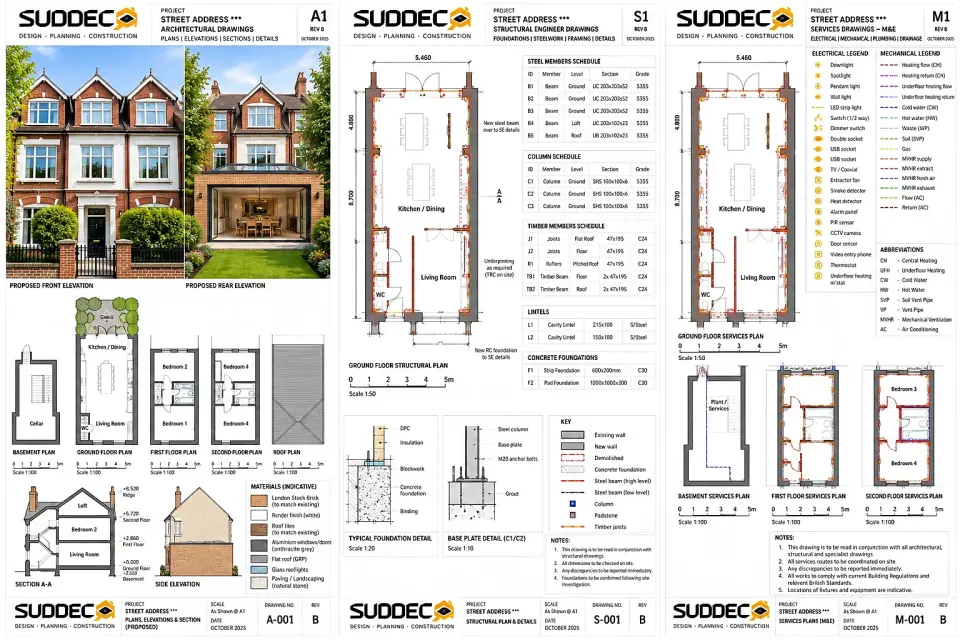
See it for your own home: put in your address and get free concept drawings and an indicative price. Get my free concept → Or see our Bathrooms →
London is the most expensive place in the UK to renovate a bathroom, and the premium is almost entirely labour. London commands roughly 20–30% more than the national average. A mid-range family bathroom costs £7,000–£14,000 in London against £4,000–£8,500 in the North of England or Scotland, and a premium London bathroom exceeds £20,000 without much difficulty.
The good news is that a bathroom is self-contained. There is no scaffolding, no planning application in the ordinary case, and no weather risk. What it does have is the highest density of trades per square metre of any room in the house, and almost no tolerance for error in the waterproofing. Those two facts explain most London bathroom budgets. All figures are indicative 2026 estimates including VAT at 20%.
London bathroom renovation cost by room type
| Project | Budget (inc. VAT) | Mid-range (inc. VAT) | Premium (inc. VAT) |
|---|---|---|---|
| Cloakroom / downstairs WC | £1,500–£3,000 | £3,000–£5,000 | £5,000–£8,000 |
| Small bathroom (4–6 m²) | £3,000–£5,000 | £5,000–£9,000 | £9,000–£18,000 |
| Medium bathroom (6–10 m²) | £4,500–£7,000 | £7,000–£13,000 | £13,000–£25,000 |
| En-suite (3–6 m²) | £3,000–£5,500 | £5,500–£10,000 | £10,000–£18,000 |
| Wet room (any size) | £4,000–£7,000 | £7,000–£15,000 | £15,000–£30,000+ |
Two footnotes that matter in London. First, the regional premium means the mid-range column is the one that applies to most Greater London projects. Second, a like-for-like replacement — keeping the toilet, basin, bath and shower where they are — sits at the bottom of the range. A quick estimate for a 6 m² family bathroom at mid-range specification with the layout unchanged is £6,000–£8,000 all-in. Add a layout change, underfloor heating and premium tiles, and you are looking at £10,000–£14,000.
What you are actually paying for
| Element | Typical range (inc. VAT) | Notes |
|---|---|---|
| Sanitaryware — budget suite | £400–£800 | Close-coupled WC, pedestal basin, acrylic bath |
| Sanitaryware — mid-range | £1,200–£2,500 | The suite is 15–30% of the total project cost |
| Sanitaryware — premium | £3,000–£8,000+ | Designer brands and freestanding baths |
| Tiling | £10–£150+ per m² | A standard bathroom uses 15–30 m² of wall tile |
| Wet room tanking | +£500–£1,500 | Over a standard shower enclosure; must be done correctly |
| Underfloor heating | £400–£1,200 | Electric mats versus wet systems |
| Electrics — downlights, extractor, shaver point | £300–£600 | £800–£1,500 with underfloor heating and smart controls |
| Plumbing — moving the layout | £800–£2,500 | The single biggest optional cost in the room |
| Boiler upgrade | £1,500–£3,500 | Where the existing boiler cannot serve the new demand |
| Temporary kitchen or alternative facilities | £500–£2,000 | Relevant if it is the only bathroom in the house |
London day rates are the lever on all of the above. Bathroom fitters run £250–£350 per day within Greater London against £180–£250 outside it. Specialist tilers are £150–£250 per day and plumbers £200–£350 per day. On a two-week project that gap is the region's premium, in one line.
London property issues that add cost
The city's housing stock creates a predictable list of surprises. Budget a 10–15% contingency specifically for these:
- Solid walls and no cavity. Common in Victorian and Edwardian terraces. Tanking, insulating and chasing services into solid brick is slower than working with modern construction, and any damp in the wall must be resolved before tiling.
- Suspended timber floors. Rotten joists and inadequate boarding for tiling are frequent. Subfloor replacement runs £400–£1,500.
- Soil stack position. In London terraces the stack is usually at the rear, which is fine for a rear bathroom and awkward for a front one. Moving a WC a long distance from the stack is expensive and sometimes impossible without a macerator.
- Water pressure and supply. Upper floors in converted Victorian houses often have poor pressure; a pumped supply or an unvented cylinder may be needed. Old lead supply pipework sometimes has to be replaced before a new bathroom can be signed off.
- Damp and penetrating water. Damp-proofing or tanking adds £500–£2,000.
- Asbestos. Essential to check in pre-1980 properties. A survey costs £200–£400; removal for a bathroom strip-out is commonly £200–£1,500 or more.
- Ventilation. Internal and windowless bathrooms need mechanical extract to current standards, which may mean a duct run to an external wall and a longer programme.
Permissions: what a London bathroom actually needs
A straightforward bathroom replacement needs neither planning permission nor building regulations approval. Approval is triggered by specific events:
- Removing or altering a structural wall. Building regulations approval costs £200–£600, plus a structural engineer at £500–£1,500 and a steel beam at £1,500–£3,000 if a beam is needed.
- New electrical circuits. All bathroom electrics must be Part P certified, and the room's zones restrict where sockets and switches may go.
- Creating a new bathroom or en-suite. New soil pipe runs and floor loading need checking, and building control should be notified.
- Party wall. If the work affects a shared wall — tanking a wall shared with a neighbour, or inserting a beam — the Party Wall etc. Act 1996 applies, at £700–£2,000, and £1,500–£2,500 for an agreed surveyor in central London.
Leaseholders have an additional layer. Most leases require the freeholder's consent for alterations, and managing agents will normally ask for a licence to alter, evidence of insurance, and adherence to restricted working hours. Building works in blocks frequently cannot start before 8am or run past 5pm on weekdays, and not at all at weekends. That constraint alone can add a week to a London bathroom programme, so read the lease before you book a fitter.
Timing and the August squeeze
A mid-range London bathroom takes 2–4 weeks on site. A wet room takes longer because of the tanking and the curing time between coats, and a full rip-out with subfloor repairs can run to five or six weeks.
Timing has a real effect on both availability and price. Demand for bathroom work in London peaks in late summer, when homeowners want the room finished before autumn and before the school term starts. Fitters and tilers book out, and the good ones book out first. If you want work done in August, start the design in May and book the fitter six to ten weeks ahead. Scheduling a bathroom for January or February, or in the quieter weeks either side of the summer, gives you better choice of trades and a slightly firmer price.
How to spend a London bathroom budget well
- Keep the layout. Moving the WC, basin or bath is the fastest way to add £1,000–£2,500. If the existing layout works, spend that money on better fixtures and finishes instead.
- Spend on waterproofing, not on tiles. Failed tanking causes water ingress that damages joists and ceilings, and repairs cost far more than the upgrade would have.
- Choose standard tile formats. Large-format porcelain needs a very flat substrate and a skilled tiler, and both are priced at London rates.
- Buy the suite yourself if you want to control specification. But agree who is responsible for defects and deliveries, and make sure it arrives before the fitter does.
- Keep a 10–15% contingency. Rotten subfloor, hidden leaks and asbestos are the three most common findings, and all three are invisible until strip-out.
Getting a firm London price
A bathroom quote is only meaningful once the layout and specification are fixed, because that is what determines the plumbing, the tiling quantity and the electrical scope. Our free concept service checks your address and produces concept drawings with an indicative cost. The Concept package gives measured drawings and a render set at £995, which is usually enough to get like-for-like quotes from fitters. Where structural work, a new en-suite or a leasehold licence to alter is involved, Design + Planning at £2,495 covers drawings, applications and structural engineering. Design to Build, where Suddeco carries out the work at a fixed quote, starts at £4,500. We work across Greater London only.
Frequently asked questions
How much does a bathroom renovation cost in London?
A mid-range family bathroom costs £7,000–£14,000 including VAT, against £4,000–£8,500 in the North of England. London carries a 20–30% premium, and premium projects with high-end sanitaryware or a wet room easily exceed £20,000. These are indicative 2026 estimates.
Why is a London bathroom so much more expensive?
Labour is the main driver: bathroom fitters charge £250–£350 per day in Greater London against £180–£250 outside it. Restricted access, no rear access for waste, solid-walled period properties, poor water pressure on upper floors and leasehold working-hour restrictions all add cost.
Do I need planning permission for a bathroom renovation?
No. A bathroom replacement or internal reconfiguration within a dwelling does not need planning permission. Building regulations approval is triggered if you remove a structural wall, create a new room, or install new circuits, and costs £200–£600.
How much does it cost to move the bathroom layout?
Moving the WC, basin or bath adds £800–£2,500 in plumbing alone, because it means lifting floors and chasing walls. Keeping the existing layout is the single largest saving available on a bathroom project.
How much does a wet room cost in London?
A mid-range wet room costs £7,000–£15,000, and a luxury wet room £15,000–£30,000+. The premium over a standard shower bathroom is £1,000–£3,000, driven by full tanking, a linear drain and precise floor grading. Cutting corners on tanking is a false economy.
How much does a new en-suite cost?
Creating a new en-suite from bedroom space costs £5,500–£14,000 including VAT, covering partitioning, new soil pipe runs, structural checks for floor loading, ventilation, plumbing, electrics, tiling and a mid-range suite. Renovating an existing en-suite is cheaper at £3,000–£8,000.
How long does a London bathroom renovation take?
Two to four weeks on site for a mid-range bathroom. A wet room takes longer because of tanking and curing time, and a full strip-out with subfloor repairs can run to five or six weeks. Leasehold working-hour restrictions can add a week on their own.
When is the best time to book a bathroom renovation in London?
Demand peaks in late summer, when fitters and tilers book out weeks ahead. If you want work done in August, start the design in May and book your fitter six to ten weeks in advance. January and February, or the quieter weeks either side of summer, offer better availability and firmer prices.
See your bathroom before you strip it out
Get a free render of your finished bathroom plus an indicative London price, based on your layout and specification.
Get your free concept →